
Search Knott County Property Records
Start with what you already know. The Knott County PVA runs a quick search by parcel, owner, or address. An address unlocks the tax-map identity. An owner name can round up every parcel listed to that person. A full map ID is the strongest key, bridging the PVA, tax, and mapping systems at once. Whatever the system returns, copy the spelling and punctuation exactly. Knott County adds a wrinkle: a postal town can cover land well past its borders. Rural tracts often go by a branch, creek, highway, or small community rather than a neat street address.
Next, find the land instrument that moved the parcel. The Knott County Clerk links to the eCCLIX recording portal, and the clerk's separate delinquent-tax system can be searched by owner, address, bill, purchaser, or map ID. Trust the deed for title, not the tax roll. A parcel polygon is a reference aid only, never a legal survey.
- Enter the situs address in the PVA search, then save the full parcel or map ID exactly as shown.
- Search the county clerk's land index by the owner names and follow the cited deed, book, page, or instrument reference.
- Check the assessment roll and the clerk's delinquent-tax portal, noting that the sheriff handles the regular collection period.
- Compare the parcel shape with the deed, plat, roads, streams, and adjoining tracts. Do not treat the tax line as a survey.
- Ask the clerk, PVA, circuit clerk, library, or KDLA for material that a gated portal does not reveal.
Need a closer look at entry fields and fallback methods? The Knott County property search breaks them down. Copy every cross-reference before leaving a result screen, because one missing key can make the next office search much harder.
Knott County Property Record Offices
No single database holds everything. Knott County property records sit in an office chain instead. The clerk records deeds, mortgages, releases, plats, leases, and delinquent tax-sale material. The PVA maintains assessments, ownership changes, tax maps, building characteristics, and exemptions. It sets no tax rates and does not collect the bill either. The sheriff collects property tax during the annual window. The Circuit Court Clerk holds foreclosure, quiet-title, partition, and other case files whenever a dispute reaches court.
Knott County PVA Search Keys
The PVA's public label confirms three ways into Knott County property records. Search only those modes. Skip any assumed parcel-card fields until you see them. Record exactly what the live result actually displays. A mailing address, a situs address, a legal description, and a parcel number are different keys, even when one record shows all four.
| Search Key | Best Use | Important Limit |
|---|---|---|
| Parcel | Cross-check a known map ID | The local number format was not published |
| Owner | Find land listed to a person or entity | Name order and trust or company matching must be tested |
| Address | Begin with a known situs | A postal city does not prove municipal location |
The official Knott County PVA site is the direct entry point. View the current Knott County PVA page to check parcel and owner of record details there yourself.
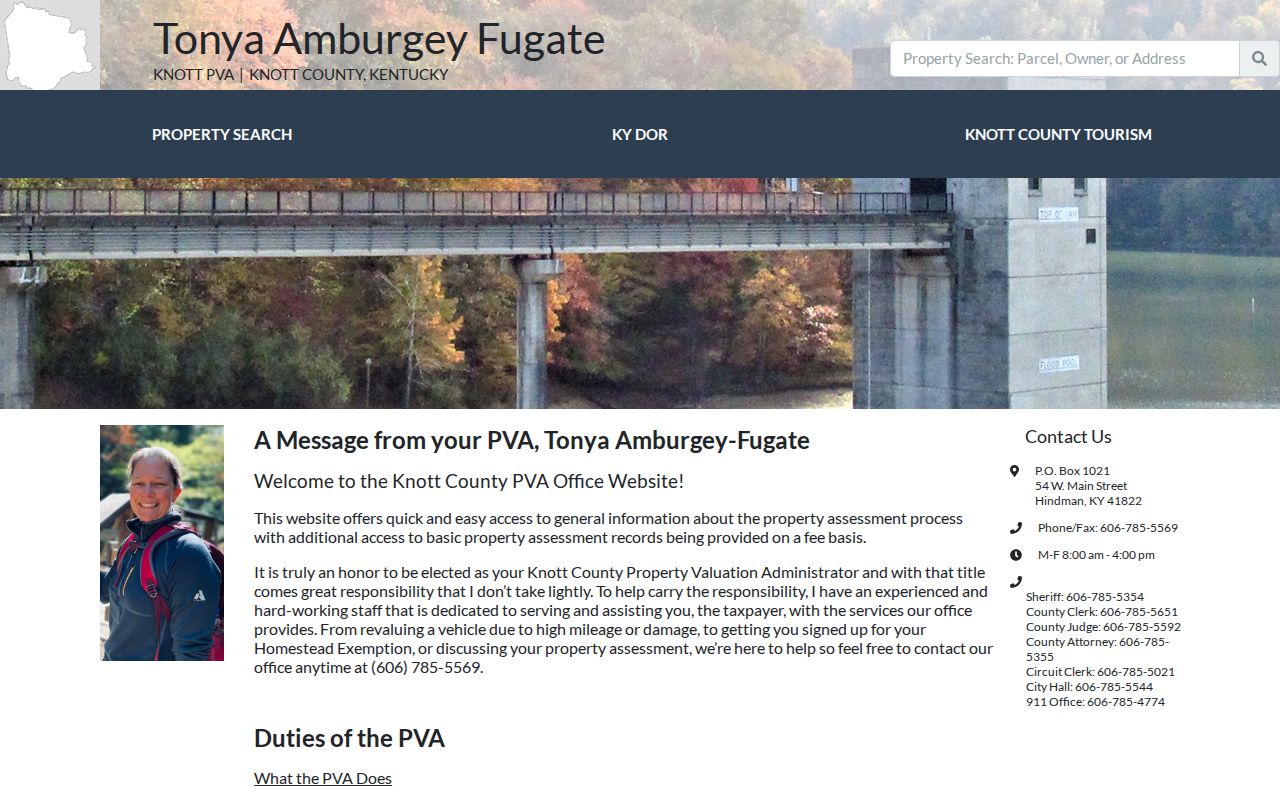
The image shows the parcel, owner, and address search labels on the PVA screen.
Knott County Deeds Behind Tax Cards
A PVA name is only a tax-roll entry. For the actual transfer, the parties, the legal description, and any prior-record reference, the deed recorded by the Knott County Clerk is the document to inspect. The clerk's public site points online users to eCCLIX. An account is required before the Knott deed index opens. No online year range or copy price is published. That gate makes the office counter and historic finding aids a normal part of a property search, not a last resort. Start with the current owner of record as grantee. Locate the acquiring deed, then treat that deed's grantor as the next name in a backward chain. Repeat the process. Copy any book and page citation exactly. Mineral reservations, releases, mortgages, easements, and probate transfers can form separate lines in the same land history. Knott County's eastern Kentucky deed records often require more than one index series to trace fully.
- Grantor
- The party conveying an interest.
- Grantee
- The party receiving that interest.
- Parcel
- A tax and mapping unit, not proof of a surveyed boundary.
- Plat
- A recorded drawing that may show lots, roads, and easements.
Knott County Records Span Three Eras
Knott County was formed in 1884. Its land trail now spans bound books, archival film, and partial online access. The Kentucky Department for Libraries and Archives inventory lists deed microfilm covering 1884 through 2015, surveys from 1884 through 1930, tax books for 1889 through 1892, and wills beginning in 1892. Those dates cover the KDLA inventory, not eCCLIX. KDLA also flags a 1929 courthouse disaster. It does not say which volumes were harmed. A gap in a deed index is therefore a question, not proof that no transfer took place. Ask whether the book was reconstructed, moved, filmed, or indexed under another spelling. Tax books, wills, surveys, later deeds, and adjoining-owner references can rebuild part of a broken chain. Knott County property records reward that second look.
Archive clue. The 1884 through 2015 deed-film span is an archival anchor; the start year of the public online index remains unverified.
Types of Knott County Property Records
No single document settles every land question. Knott County property records split ownership, value, debt, boundaries, and disputes among different custodians. Match the record to the legal question at hand, then carry its names, dates, and recording references into the next system.
| Record Type | What It Documents | Kept By | Access |
|---|---|---|---|
| Deeds and leases | Transfers and recorded land interests | County Clerk | eCCLIX account or clerk request |
| Mortgages and liens | Recorded claims and releases | County Clerk or court | Land index, CourtNet, or case file |
| Assessment | Tax-roll owner, value, maps, exemptions | County PVA | PVA page, qPublic, or office |
| Tax collection | Regular bills and delinquent liens | Sheriff, then County Clerk | Office or delinquent-tax portal |
| Plats and surveys | Lots, roads, easements, survey references | County Clerk and KDLA | Books, eCCLIX, or archive film |
| Property cases | Foreclosure, partition, quiet-title orders | Circuit Court Clerk | CourtNet index and local file |
Start with the deed for any transfer. The PVA tax roll is the tool for assessment research. A plat or survey holds the boundary detail. A court judgment can rewrite rights entirely. The clerk's proposed records project also flags old mortgage and mineral-lease books, and those volumes can surface interests that a current tax card simply will not explain.
Knott County Tax Record Chain
Kentucky splits the tax job in two. The PVA values property and keeps the roll. Taxing bodies pick the rates, and the sheriff collects during the regular season. Once a bill goes unpaid, it moves into the clerk's delinquent process. That is why one office shows the value. Another holds the payment or lien record. Mark January 1 on the calendar. Listing opens that day and closes March 1. The roll then opens for a 13-day inspection window starting the first Monday in May. A taxpayer who disagrees first conferences with the PVA. A county appeal must reach the county clerk. The deadline is one workday after inspection closes. From there the local board hears the matter. Further appeal goes to the Kentucky Board of Tax Appeals. The Knott delinquent-tax search earns its keep as a cross-check tool. It filters by bill number, tax year, owner, and purchaser. Map ID, property address, status, and amount range work too. Partial-match controls round out the options.
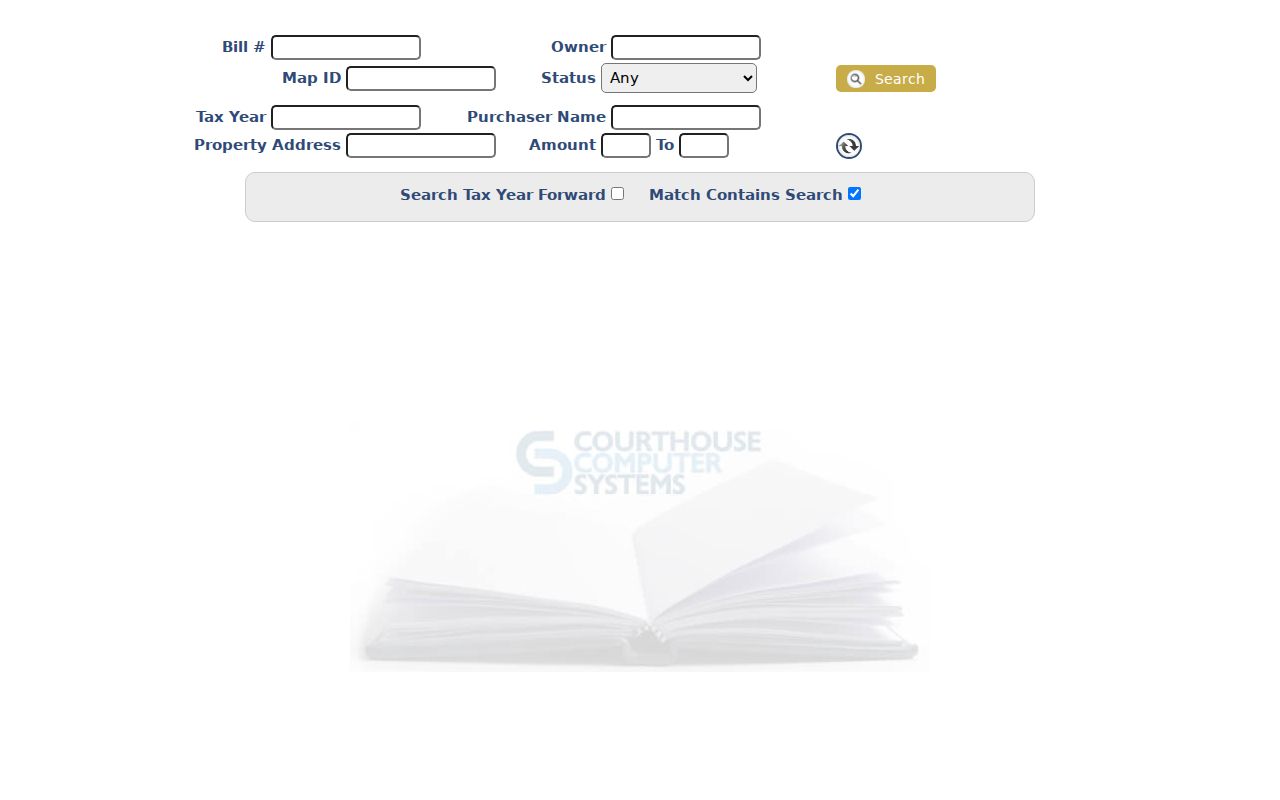
One field deserves a caution flag. The purchaser entry in Knott County delinquent-tax records names the tax-sale buyer, not the owner of record. Treat it as a sale lead, never as a deed transfer on its own.
Knott County Parcel Map Evidence
The official PVA map code comes loaded with tools. Point and polygon selection, identify, geometry intersection, and buffer distance controls are all in the build. Measurement, printing, highlighting, and a layer-list module come with them. The vendor demo, though, is not the live public viewer. Knott County's own site governs. Confirm there which controls are actually exposed before relying on any one of them. A selected parcel can hand you a map ID for a tax or PVA search. Its shape also helps you compare nearby roads, streams, and adjoining tracts. But tax geometry can lag after a split or combination. It also rarely matches a fence line. On lot-and-block land, pull the recorded plat. On metes-and-bounds land, keep every monument, bearing, distance, acreage, highway, creek, access, and easement term intact. Knott sale notices show why that full wording matters. For statewide context, open Kentucky Explorer GIS. Just confirm any parcel attribute comes from the Knott layer. Only then treat it as local record data.
Knott County Plats Go Digital
A 2023 Knott County Clerk project proposal set an ambitious digitization slate. It covers five plat books from 1950 through 2023. It also covers twenty-one mortgage books from 1884 through 1969, and twenty-seven mineral-lease books from 1894 through 1974. The plan kept three stages distinct. Security film on 35mm stock would go to KDLA. TIFF image files would be produced. Indexed images would follow. Those stages are not the same thing. A volume can sit preserved on film without being searchable online. It can also be digitized without any public index at all. Ask the clerk directly which series are finished and which stage each one has reached. The distinction matters in Knott County property records. Surface title and mineral rights can travel on different instruments there. When a deed mentions coal or minerals, search the leases, assignments, reservations, and releases too. A modern owner name may not surface every recorded interest tied to the land. Note: The project document is a proposal and bid record. It does not prove that every planned image is now public.
Knott County Court Property Files
Court files add a layer to Knott County property records. The recorder and assessor cannot supply this layer. Foreclosure, quiet-title, partition, lien enforcement, and estate disputes all leave traces there. CourtNet locates Kentucky cases by party and county. Its manual spells out the controls. These include party type, case type, name, date, event range, and active-case filters. The result is an index lead only. The Knott Circuit Court Clerk keeps the actual file and enters the orders. Master Commissioner notices can bridge a civil case number to a sale date. They can also supply a legal description. One 2024 Knott notice described a quarter-acre tract in detail. The markers included an elm tree, marked rocks, Highway 1087, a driveway, a water system, and shared access. That level of detail identifies land with no stable street number. Still, the notice is not the deed recorded after a sale. And publication alone never proves the sale actually closed.
Knott County Place Names Matter
In Knott County, geography is part of the search key. Official place and ZIP material lists Hindman, Pippa Passes, Vicco, Emmalena, Fisty, Sassafras, Vest, Garner, Kite, Leburn, Littcarr, Mallie, Mousie, Pine Top, Redfox, Dema, Raven, and Topmost. An old deed or notice may lean on a branch, creek, road, post office, or community name instead of the current mailing format. Search both. The ZIPs tell part of the story. Hindman uses 41822, Pippa Passes 41844, and Vicco 41773, yet a ZIP is a delivery clue, not a county line. Vicco's former two-county status makes that warning sharper. Preserve every spelling exactly as the instrument gives it, and confirm the recording county before concluding no record exists.
Knott County City Record Boundaries
Hindman and Pippa Passes are both active municipalities. Their deeds, assessments, and parcel records still live in Knott County systems. Hindman serves as the county seat. The clerk and PVA share a West Main Street civic address there, and the judicial center sits close by. Pippa Passes has a mappable 1983 incorporation filing tied to a circuit court judgment. City status frames local ordinances and boundaries. It does not create a separate city recorder.
Vicco takes a different route. Kentucky Secretary of State filings show a former two-county geography and an administrative dissolution sequence in 2024 and 2025. Treat no city permit office there as still active. First check whether the parcel sits in Knott or Perry County, then take the question to that county's land and assessment custodians.
Note: A mailing label can outlive a city boundary or municipal government, so compare the deed, parcel map, and SOS filing.
Knott County Offline Record Paths
Portal gates are common here. eCCLIX requires an account. qPublic blocks direct public inspection, and the direct parcel-viewer address does not resolve. The offline chain therefore anchors any complete Knott County property search. Call or visit the county clerk for deed and plat indexes. Ask the PVA for the roll and map. After a CourtNet lead, request the actual court file from the Circuit Court Clerk.
For older work, lean on KDLA's land inventory and deed-search handout. The Knott County Public Library keeps an in-library genealogy collection. It also offers local history, computers, staff help, and copying. Its collections can normalize a surname or community clue. But a directory, obituary, or family history is only a lead. Route it back to a deed, will, tax book, or court file. Treat it as ownership evidence only then.
Limits of Knott County Property Records
Official Knott County property records answer many questions, but each answer has limits. The tax roll names an owner of record. Yet the PVA entry can lag behind a fresh deed. A deed only conveys whatever interest the grantor actually held. A GIS map line may not match a field survey. An assessed value is no substitute for a sale appraisal. Mortgages, liens, plat data, and court events each carry their own scope too. Protected items like recent vital records sit outside property files. They follow separate Kentucky access laws.
Kentucky's Open Records Act, KRS 61.870 through 61.884, sets a written request route. It generally calls for a response inside five business days, with exemptions. Safe at Home can give qualifying survivors a substitute address. Still, the state notes that real-estate holdings stay public. Take care not to republish protected personal details that surface inside an old instrument.
Lawful use. Knott County property records support purchase research, boundary review, estate work, tax questions, and civic oversight. They do not replace a title professional or licensed surveyor, and they must never be used to stalk, harass, or harm anyone.