
Read Knott County Tax Records
Every field on a Knott County tax document traces back to a stage in Kentucky's process. The Knott County PVA sets values at fair cash value and keeps the ownership lists, parcel maps, building details, and exemptions. Taxing districts choose the rates after that. The sheriff collects the regular bills. Once the sheriff's collection window closes, delinquent bills move to the county clerk.
| Field | What It Shows | Where |
|---|---|---|
| Fair cash value | Kentucky assessment standard | Knott PVA |
| Assessed value | Value placed on the tax roll | Knott PVA |
| Exemption | Approved statutory relief | Knott PVA |
| Current bill | Annual charge and status | Knott sheriff |
| Delinquent bill | Purchaser, status, amount | Knott clerk |
Remember what a tax record is not. The assessed value is neither a sale price nor a private appraisal. The bill itself proves nothing about current title. Read each figure alongside its year, its assessment date, and the office that issued it.
Clear office roles prevent most mistakes. The PVA neither sets the tax rate nor collects the money. Districts apply their rates after assessment. The sheriff runs the ordinary collection period. Only then does a delinquent bill reach the county clerk. Direct questions to whichever office holds that stage. A PVA card cannot confirm a payment, and a clerk certificate cannot explain how a building was valued.
January 1 Knott County Tax
Kentucky fixes January 1 as its assessment date. The listing period runs through March 1. That single date explains a common puzzle. A bill can name a prior owner months after a deed transfer. It may also arrive "in care of" the new owner while the roll still carries the January 1 name.
When names conflict, lay four items side by side. These are the deed date, the roll year, the mailing line, and the parcel ID. The recorder's instrument is the true transfer record. The PVA and the bill each follow their own annual cycles.
State law applies a fair-cash-value standard. This means the price property would fetch in a voluntary sale between informed parties. The public assessment remains an administrative value for taxation all the same. Sales, cost, and income evidence can each influence valuation. One unusual deed consideration does not prove the roll was wrong on January 1. A later asking price does not either.
Look Up Knott County Tax
Start with the parcel number or street address at the PVA. From there, trace the bill into whichever collection stage it sits in. The sheriff handles current regular bills. The office can confirm what a taxpayer owes at any point in the cycle. Once a bill moves past the sheriff's collection window, it lands in delinquent status. Those older bills can be searched through the Knott County Clerk delinquent-tax system. Treat the result there as a status check on a given date. It is not proof that a debt is still owed today.
- Search the PVA quick entry by parcel, owner, or address and preserve the exact map ID.
- Ask the sheriff about the current bill, payment status, and the correct tax year.
- If delinquent, search the clerk portal by map ID, owner, address, bill number, and year.
- Read status and purchaser fields, then confirm payment, redemption, or sale with the clerk.
- Assessed value
- The value the PVA places on the roll under Kentucky's fair-cash-value standard.
- Levy or rate
- The charge set by a taxing authority and applied to the taxable assessment.
- Homestead exemption
- Statutory relief for a qualifying owner who occupies the home on January 1.
- Tax lien
- A claim tied to unpaid tax, which is not the same as a deed transfer.
Keep three documents distinct. The assessment gives value, the bill gives a year-specific charge, and the deed records a transfer. The Knott County property value page explains why an assessed figure is not a sale estimate.
Knott County Delinquent Tax Fields
The clerk's delinquent-tax portal is the most detailed public property search screen Knott County offers. It links a bill to its owner of record, purchaser, map ID, and address. Try partial spellings for uncertain road or community names. Then double-check the year and current status. A listed purchaser may be a third-party certificate holder. Keep in mind that this may not be the parcel's deed owner.
| Search Field | Use in Knott County | Caution |
|---|---|---|
| Bill number and tax year | Targets a known annual bill | Confirm the selected year |
| Owner and purchaser | Separates taxpayer from certificate buyer | Neither field alone proves title |
| Map ID and address | Links the bill to the parcel | Old road names may require variants |
| Status and amount range | Narrows open or paid records | Status can change after capture |
| Contains and year-forward controls | Broadens a partial search | Does not prove full historic coverage |
The official delinquent-tax form shows these controls directly.
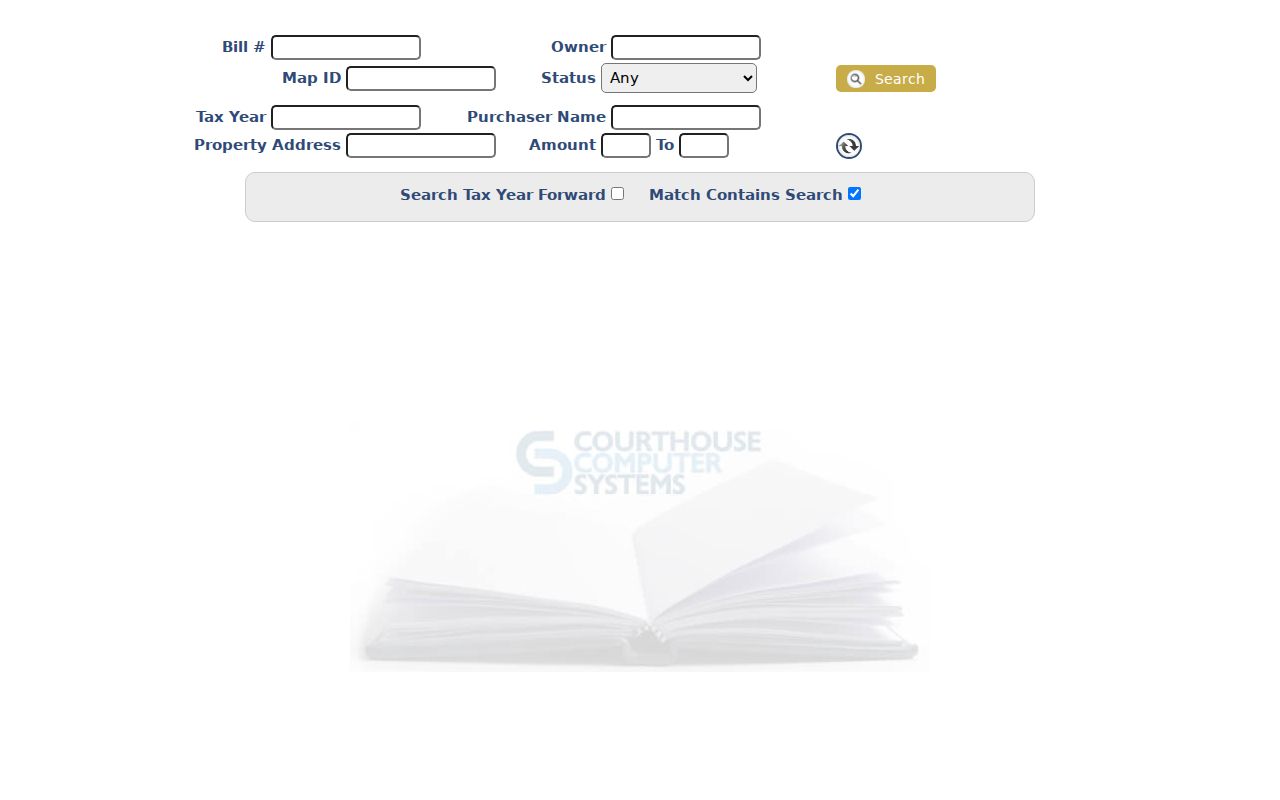
The clerk's own form is the place to plan a delinquent-bill search. Live results and current status always come from the official system itself.
Knott County Tax Calendar
Kentucky's property tax calendar opens on January 1. That date sets the value. A listing period then runs through March 1. Next, the roll opens for public inspection. It stays open thirteen days, starting the first Monday in May. Those fixed dates explain why Knott County property tax records from two offices can disagree after a sale or a building change.
The Kentucky Department of Revenue assessment process page describes inspection and review. It is also the source of the state framework. That framework is laid out here.
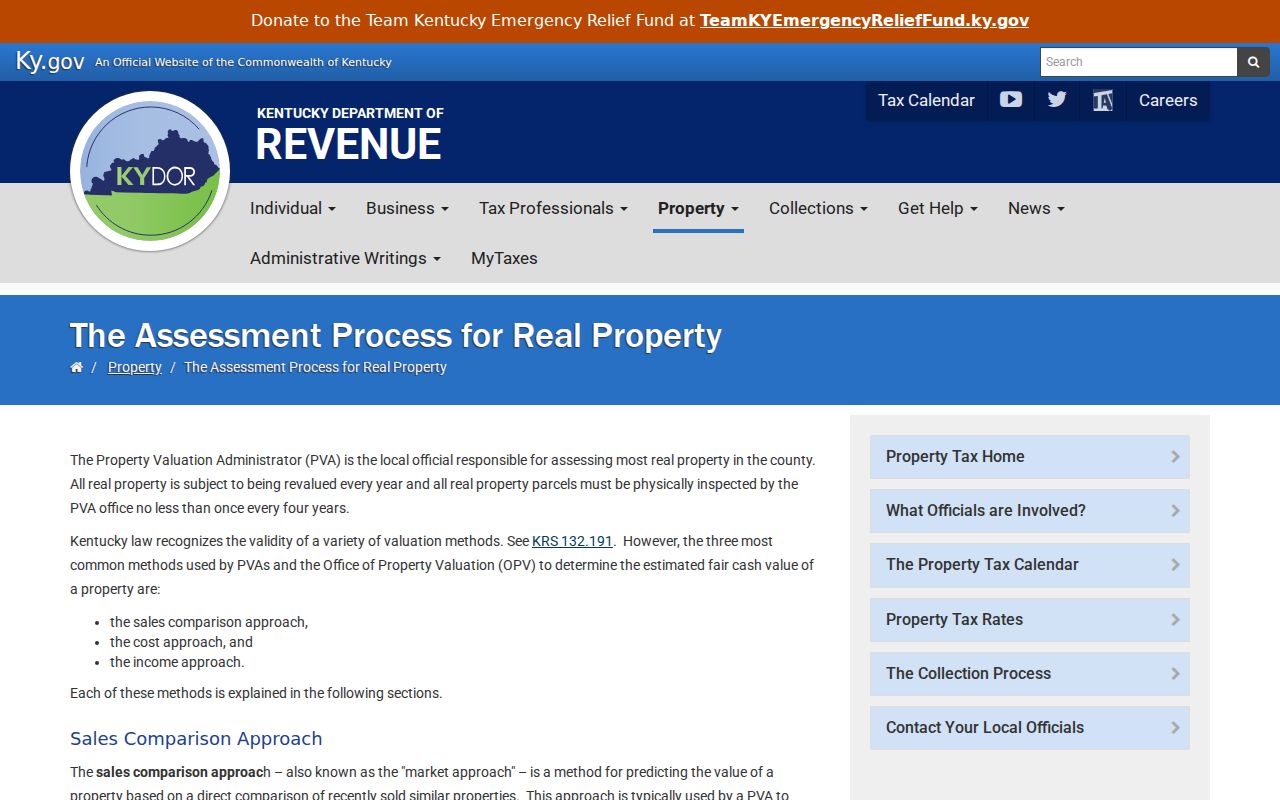
This statewide calendar sets the schedule for the local PVA review route, though the county publishes the actual inspection notice each year. Note: A January 1 tax owner may differ from the grantee on a deed recorded later that same year.
Knott County Tax Exemptions
Homestead and disability exemptions in Knott County run through the PVA. The sheriff and the county clerk do not handle them. Kentucky law, the claimant, occupancy, and the applicable year all shape eligibility. An exemption changes how an assessment is taxed. It does not shrink the parcel or rewrite the deed. Ask the PVA which form and proof apply before the annual deadline. The office states that it tracks exemptions and building characteristics. An office inspection remains the surest way to confirm an exemption flag. A basic record request works too. Either can confirm the flag or its history.
Knott County Tax Sale Status
Delinquent tax bills in Knott County follow an annual path. It runs from collection to certificates and sale. A 2023 Knott notice set out inspection, registration, and sale dates. Those dates have passed. Treat it as a map, not a calendar. The current clerk notice controls everything: deadlines, excluded bills, registration terms, and how payment works.
Suppose a purchaser's name shows up. Then chase what came after it. Look for later payments, a redemption, a court case, a release, or a deed. CourtNet can surface lien enforcement, foreclosure, or a master commissioner proceeding. The local clerk keeps the full case file, though. One delinquent-tax entry alone never proves that ownership changed hands.
Knott County public notices make useful snapshots. A historic notice spelled out the tax year and inspection place. It listed the registration cutoff, sale time, statutory exclusions, and clerk phone. Those are the fields worth copying from any current notice. Record the publication date and tax year alongside it. An expired notice can still rank high in search results. That can linger long after a bill is paid or redeemed.
Appeal Knott County Assessments
Every Knott County assessment dispute starts with a conference at the Knott PVA. That meeting must happen during the roll-inspection period. If the disagreement survives, the taxpayer files an appeal with the county clerk. That filing is due no later than one workday after inspection closes. The local board then meets twenty-five to thirty-five days later. A losing side can take the fight to the Kentucky Board of Tax Appeals. Evidence wins these cases. Bring recent comparable sales, construction or repair facts, photos, insurance information, and anything else that tests the PVA's fair-cash-value conclusion. That means anything that tests the PVA's fair-cash-value conclusion.
The Kentucky appeal guidance lays out that full sequence. The state page gives the route. The county notice fixes the exact local inspection dates. So confirm the current Knott deadline before relying on any general calendar.
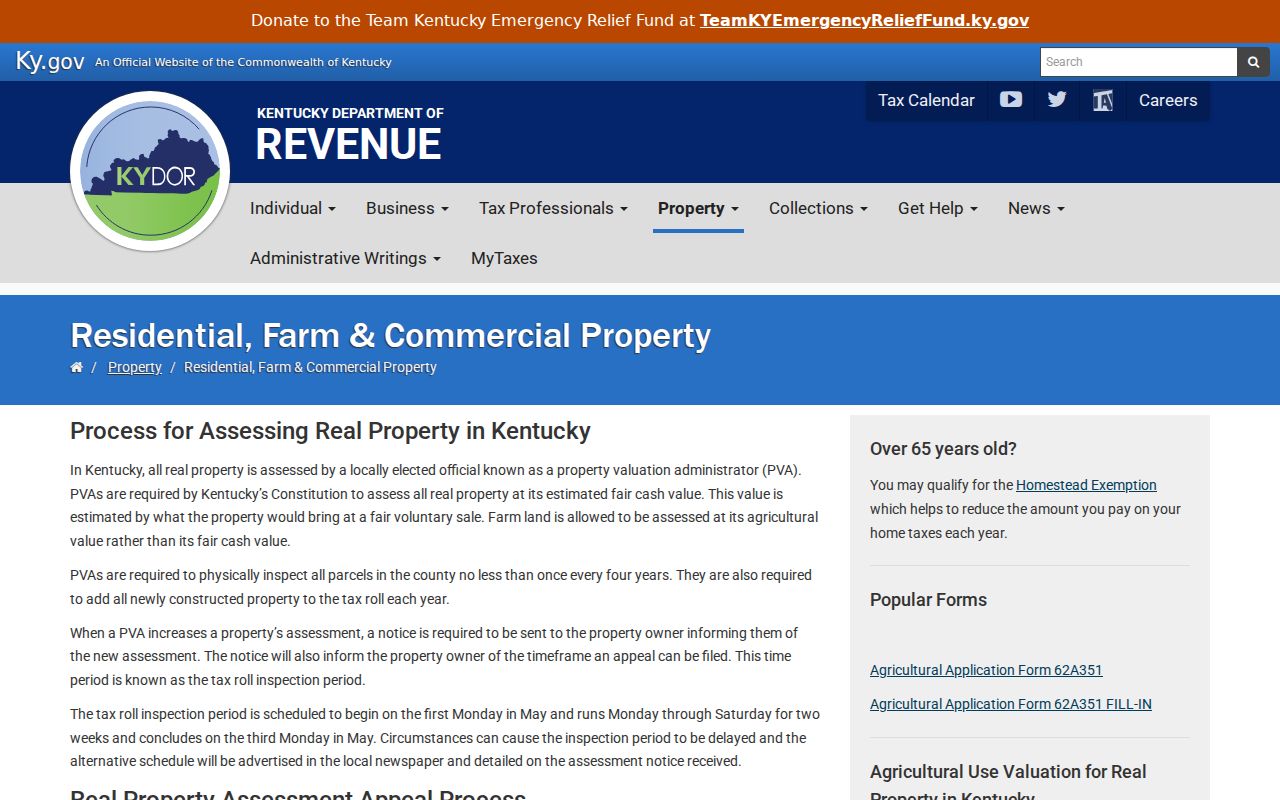
The state page explains the route, and the county notice fixes the local dates.
Appeal window. Start with a PVA conference, then file with the county clerk by one workday after the inspection period closes.